XMR Mining
How traditional Monero mining works
Monero (XMR) is a privacy-focused cryptocurrency that uses a proof-of-work (PoW) consensus mechanism to secure its blockchain. Unlike Bitcoin, Monero employs the RandomX algorithm, which is specifically designed to be ASIC-resistant. This ensures that mining remains accessible to the average person using consumer-grade hardware like CPUs and GPUs.
RandomX emphasizes egalitarian mining by allowing nearly anyone to contribute to network security. While both CPUs and GPUs can mine Monero, CPUs tend to be more efficient, making it an attractive option for those looking to start mining without heavy initial investment.
Monero mining pools
For those who wish to improve their chances of earning consistent rewards, joining a mining pool is a viable option. Mining pools aggregate computational power from multiple miners, thereby increasing the likelihood of successfully mining blocks. Here are some of the top Monero mining pools:
- SupportXMR: Offers low fees and detailed performance statistics.
- P2Pool: A decentralized mining pool that combines the benefits of solo and pool mining without the need to trust a centralized pool operator.
Mining pools typically charge fees ranging from 0% to 2%, and users receive payouts proportional to their contribution.
Monero mining algorithm
Monero employs the RandomX algorithm, designed to keep mining decentralized and ASIC-resistant. Unlike traditional algorithms, RandomX is optimized for CPUs, ensuring that anyone with a consumer-grade processor can participate. This focus on CPU mining prevents the centralization seen in other cryptocurrencies dominated by specialized ASIC hardware, thereby maintaining Monero’s commitment to egalitarian mining.
RandomX achieves this by utilizing advanced cryptographic techniques and creating a random “scratchpad” in memory, which makes mining efficient only for CPUs. Its built-in resistance to ASICs and GPUs ensures a fair playing field for all participants, reinforcing Monero’s focus on privacy, security, and decentralization.
Test 14 days of ₿itcoin mining for free
How to set up a Monero mining rig
-
1. Choose Your Hardware
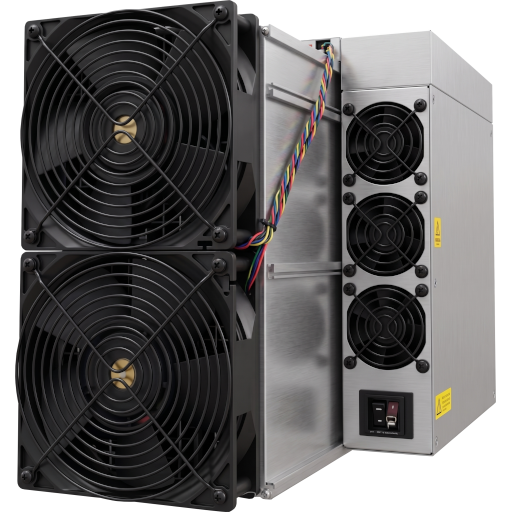
To start mining Monero, you’ll need a capable CPU or GPU. Since RandomX favors CPUs, models like AMD Ryzen 9 or Intel Core i7 are popular choices. GPUs like AMD Radeon RX 580 or Nvidia GTX 1070 can also be used, but they’re generally less efficient for Monero mining. Bitmain also offers a dedicated ASIC for Monero: the Antminer X5 model.
-
2. Set up a Monero wallet
Before mining, you’ll need a wallet to store your rewards. Options include: Monero GUI Wallet, Monerujo, or Trezor as a hardware wallet option.
-
3. Download and Configure Mining Software
Depending on your hardware, select mining software such as: XMRig (A popular choice for both CPU and GPU mining.) or CSminer (Known for its efficiency and ease of use.). Configure the software by entering your wallet address and pool details to begin mining.
-
4. Join a Mining Pool
To improve your mining efficiency, join a reputable pool. Follow the setup instructions provided by your chosen pool to connect your mining software.
-
5. Start Mining
Once everything is set up, launch your mining software and monitor its performance. Keep an eye on key metrics like hash rate and power consumption to optimize your setup.
Frequently asked questions
Monero (XMR) is a privacy-focused cryptocurrency that prioritizes untraceable and unlinkable transactions using advanced cryptographic techniques, such as ring signatures, stealth addresses, and confidential transactions. It operates on a Proof of Work (PoW) consensus mechanism with the RandomX algorithm, designed to favor CPU mining over ASICs. However, in practice, the profitability of CPU mining has significantly declined due to increased network hash rate and competition from powerful hardware setups. Despite this, Monero remains popular for its strong focus on decentralization and privacy.
Monero mining can still be profitable, but it largely depends on your hardware, electricity costs, and the current price of Monero (XMR). The RandomX algorithm favors CPU mining, allowing everyday users with consumer-grade hardware to participate. However, profitability fluctuates based on mining difficulty, market conditions, and your specific setup. Using a profitability calculator can help determine if mining XMR is financially viable for you.
In most jurisdictions, mining Monero is perfectly legal as long as you own the equipment and have permission to use the electricity. However, due to its privacy features, some governments scrutinize Monero more closely than other cryptocurrencies. Always check local regulations to ensure compliance, and avoid using unauthorized hardware or electricity for mining.
The time required to mine 1 Monero depends on your mining setup, specifically the hashrate of your hardware and the network’s current difficulty. For example, with a typical home CPU generating a few thousand hashes per second, it might take months to mine a full XMR. On the other hand, joining a mining pool can result in more frequent, albeit smaller, payouts, speeding up the process of accumulating 1 Monero.
Mining Monero can be worth it if you have access to cost-effective hardware and low electricity rates. Its ASIC-resistant RandomX algorithm ensures a level playing field, making CPU mining viable. While mining profitability depends on market conditions, Monero’s strong focus on privacy and decentralization gives it long-term value, making it an attractive option for many miners.
XMR mining resources
Here are some essential links for Monero miners:
Conclusion
Monero mining offers an exciting opportunity to contribute to one of the most privacy-focused cryptocurrencies in the market. By leveraging accessible hardware, joining a pool, and staying informed through official resources, you can start mining Monero efficiently. Whether you’re a beginner or an experienced miner, Monero’s unique algorithm and commitment to decentralization ensure a rewarding mining experience.